

The National Education Policy (NEP) 2020 reimagines school education by moving away from fragmented learning towards a more holistic, flexible, and connected approach. At the heart of this vision is the belief that education should not be confined within rigid subject boundaries but should help learners make meaningful connections across disciplines and apply their learning to real-world contexts.
One of the guiding principles of NEP 2020 is that there should be “no hard separations between arts and sciences, between curricular and extra-curricular activities, between vocational and academic streams” (NEP 2020, Principles of this Policy, p. 4). This philosophy underpins the policy’s emphasis on multidisciplinary learning, while also encouraging interdisciplinary thinking and competency-based education.
Why Multidisciplinary Learning Matters
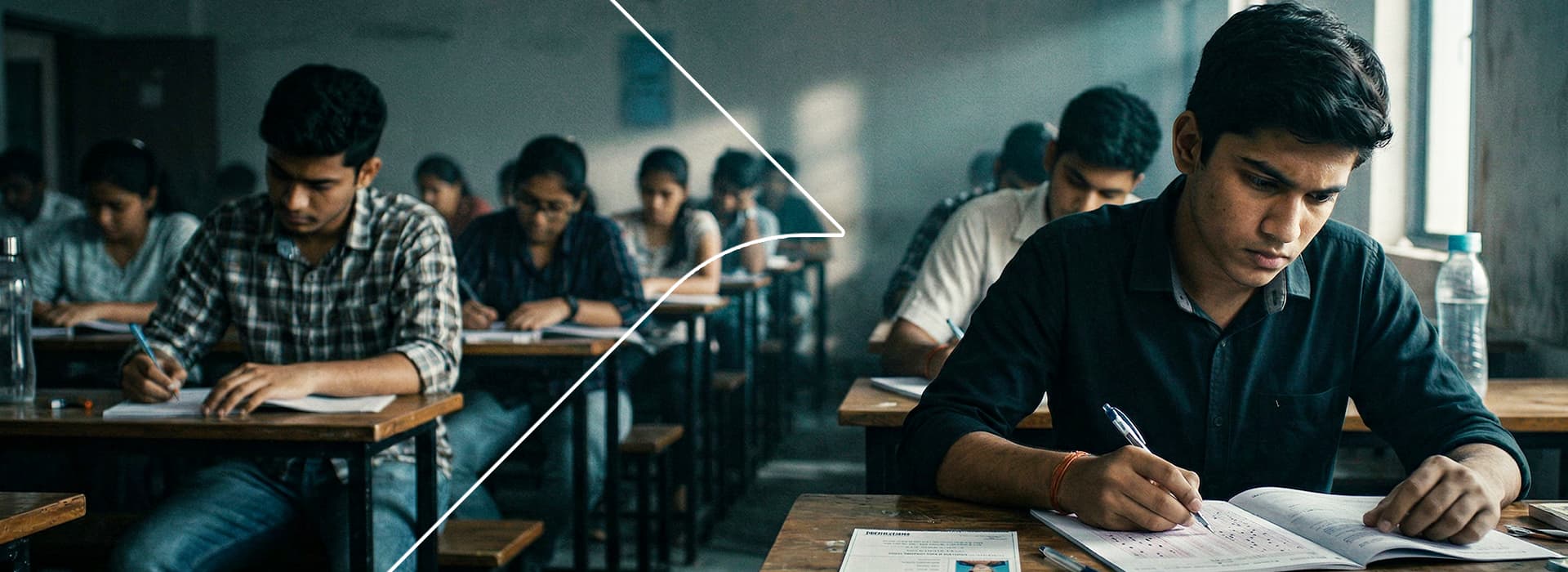
For decades, school education has largely been organised around individual subjects taught independently. While this structure provides academic depth, it often limits opportunities for students to recognise how knowledge from different disciplines connects to solve authentic problems.
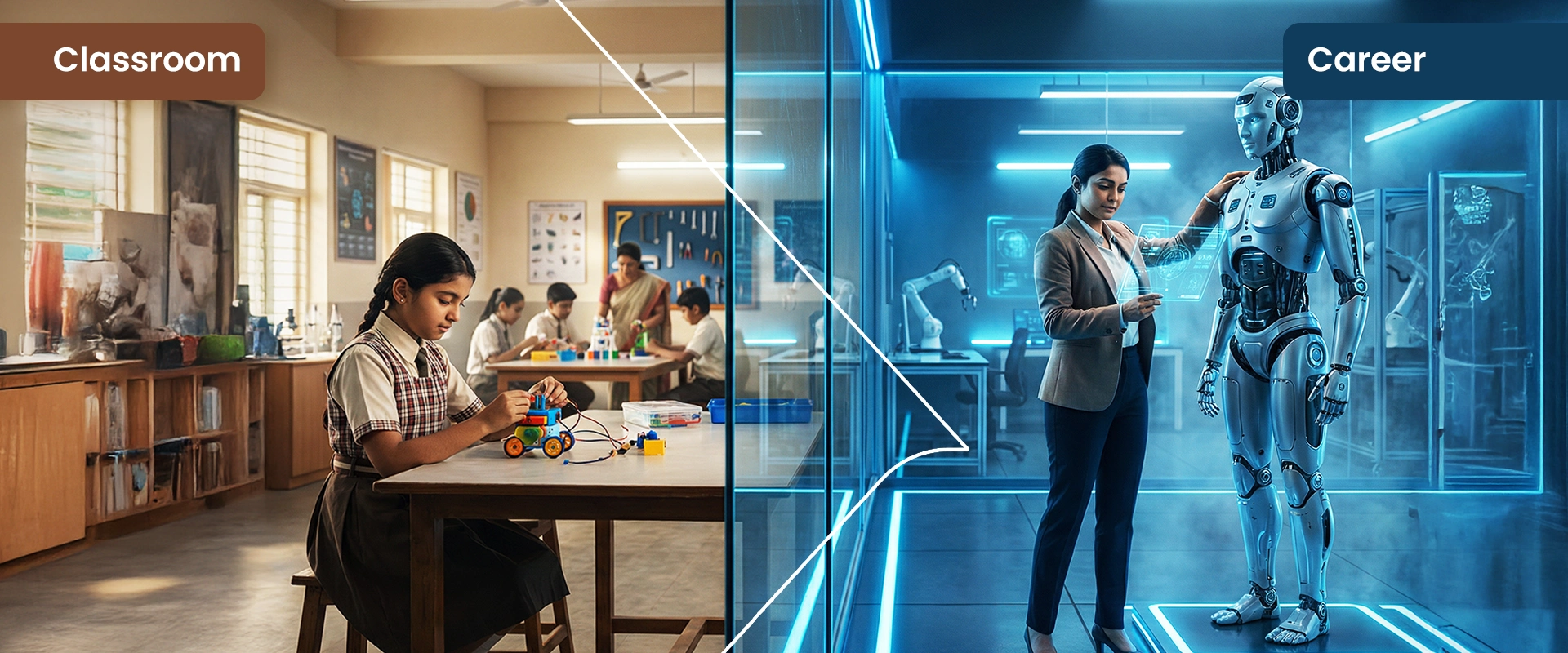
Outside the classroom, however, problems rarely belong to a single subject. Addressing climate change requires science, geography, economics, and public policy. Designing sustainable cities calls for mathematics, engineering, environmental science, design, and social sciences. Healthcare combines biology, technology, communication, ethics, and data analysis.
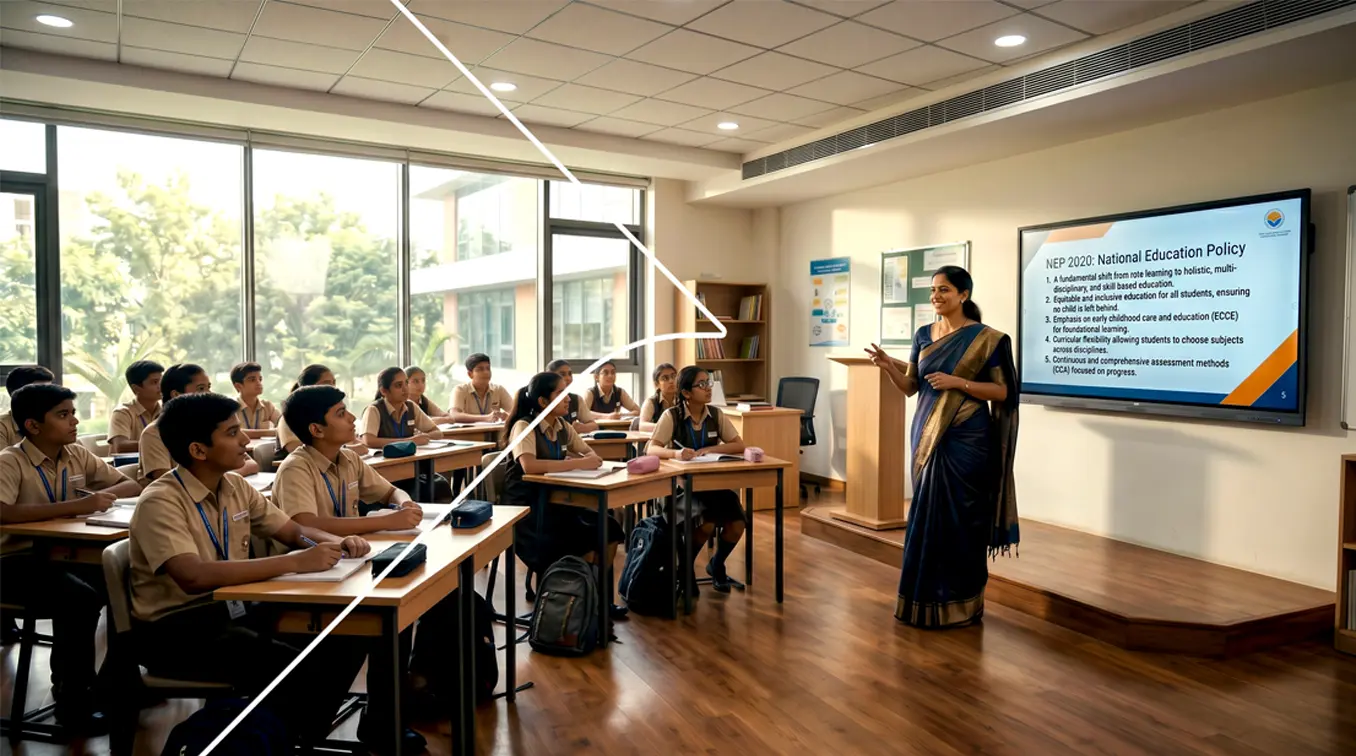
Recognising this reality, NEP 2020 seeks to prepare learners who can think critically, solve problems creatively, collaborate effectively, and adapt to changing contexts. Rather than accumulating isolated facts, students are encouraged to build integrated understanding that can be applied across situations.
The policy also introduces greater flexibility in secondary education by allowing learners to combine subjects across traditional Science, Commerce, Humanities, Arts, and vocational streams according to their interests and aspirations (NEP 2020, Section 4.9). This marks a significant departure from the rigid streaming model that has characterised Indian schooling for decades.
The Research Behind Integrated Learning
Research strongly supports the educational value of connecting learning across disciplines.
Bransford et al. (2000), in How People Learn, demonstrate that deep learning occurs when students actively connect new knowledge with prior understanding and apply concepts in meaningful contexts, rather than memorising isolated information. Similarly, the OECD’s Future of Education and Skills 2030 (2018) highlights that learners need to integrate knowledge from multiple domains to address increasingly complex global challenges. It identifies competencies such as critical thinking, collaboration, creativity, and responsible decision-making as essential for the future. Project-based learning research by Thomas (2000) further shows that when students work on authentic, multidisciplinary projects, they demonstrate higher engagement, improved conceptual understanding, and stronger retention of learning compared to traditional subject-specific instruction.
Together, these findings reinforce the vision of NEP 2020, which calls for competency-based, multidisciplinary education that enables learners not only to acquire knowledge but also to integrate and apply it meaningfully across diverse contexts.
How NEP 2020 Brings This Vision into Schools
NEP 2020 embeds multidisciplinary learning progressively across the school years rather than treating it as a separate initiative.
Stage
Grades
focus
Foundational
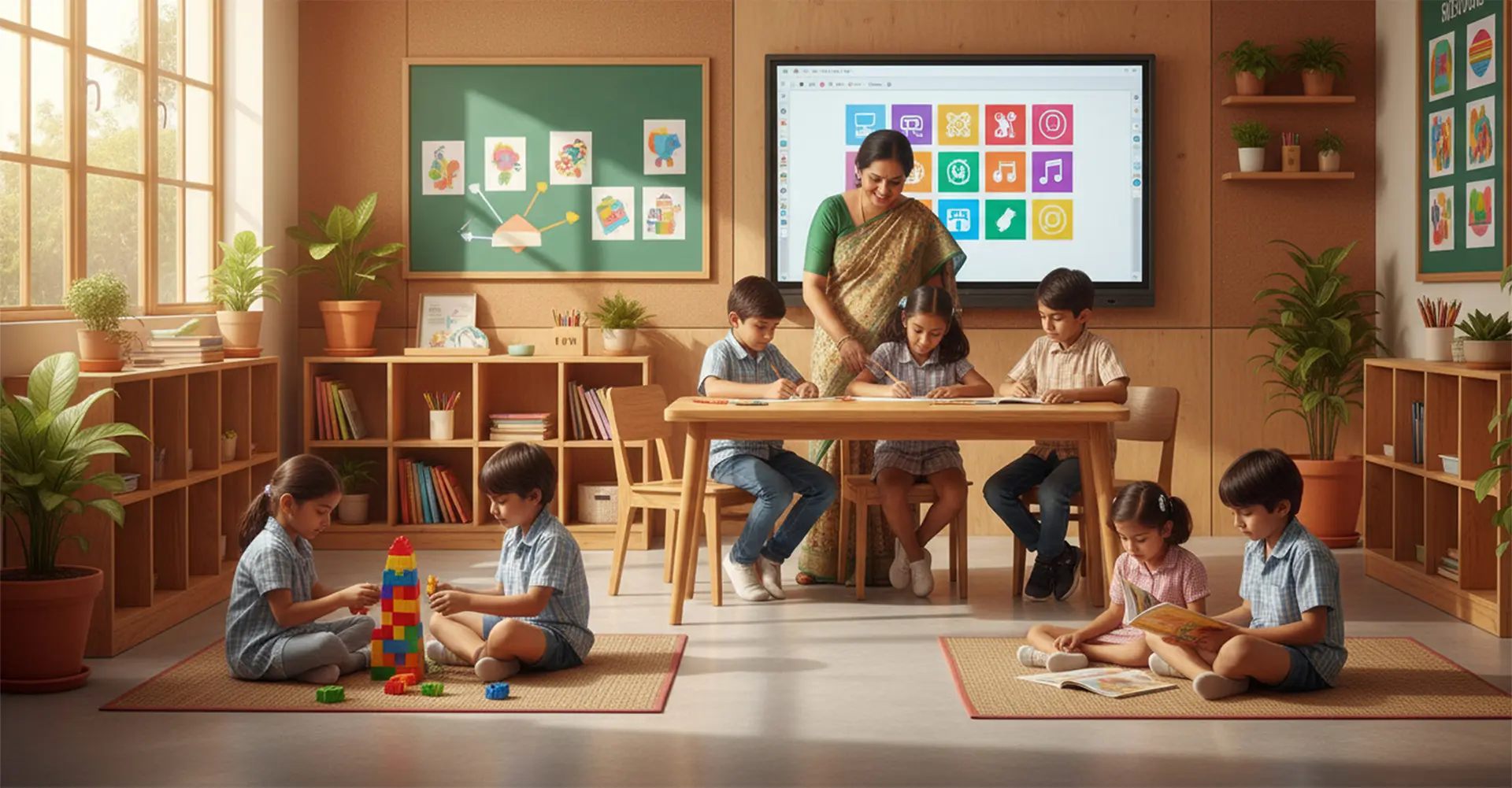
Preschool (3 years) + Grades 1-2
Play-based and experiential learning
Preparatory
Grades 3-5
Activity-based, experiential, and discovery-oriented learning
Middle
Grades 6-8
Experiential, subject-based learning with increasing interdisciplinary connections
Secondary
Grades 9-12
Flexible subject choices, multidisciplinary learning, and deeper competency development
By the Secondary Stage, NEP 2020 describes the curriculum as “four years of multidisciplinary study” (Section 4.2), enabling learners to pursue combinations of subjects aligned with their interests, strengths, and future aspirations.
The policy further promotes this vision beyond school by encouraging higher education institutions, including engineering, medical, agricultural, and law institutions to evolve into multidisciplinary institutions offering diverse learning opportunities.
What Multidisciplinary Learning Looks Like in Practice
Contrary to popular belief, multidisciplinary learning does not require schools to redesign the entire curriculum overnight. It often begins by intentionally connecting concepts that students are already learning across subjects.
For example:
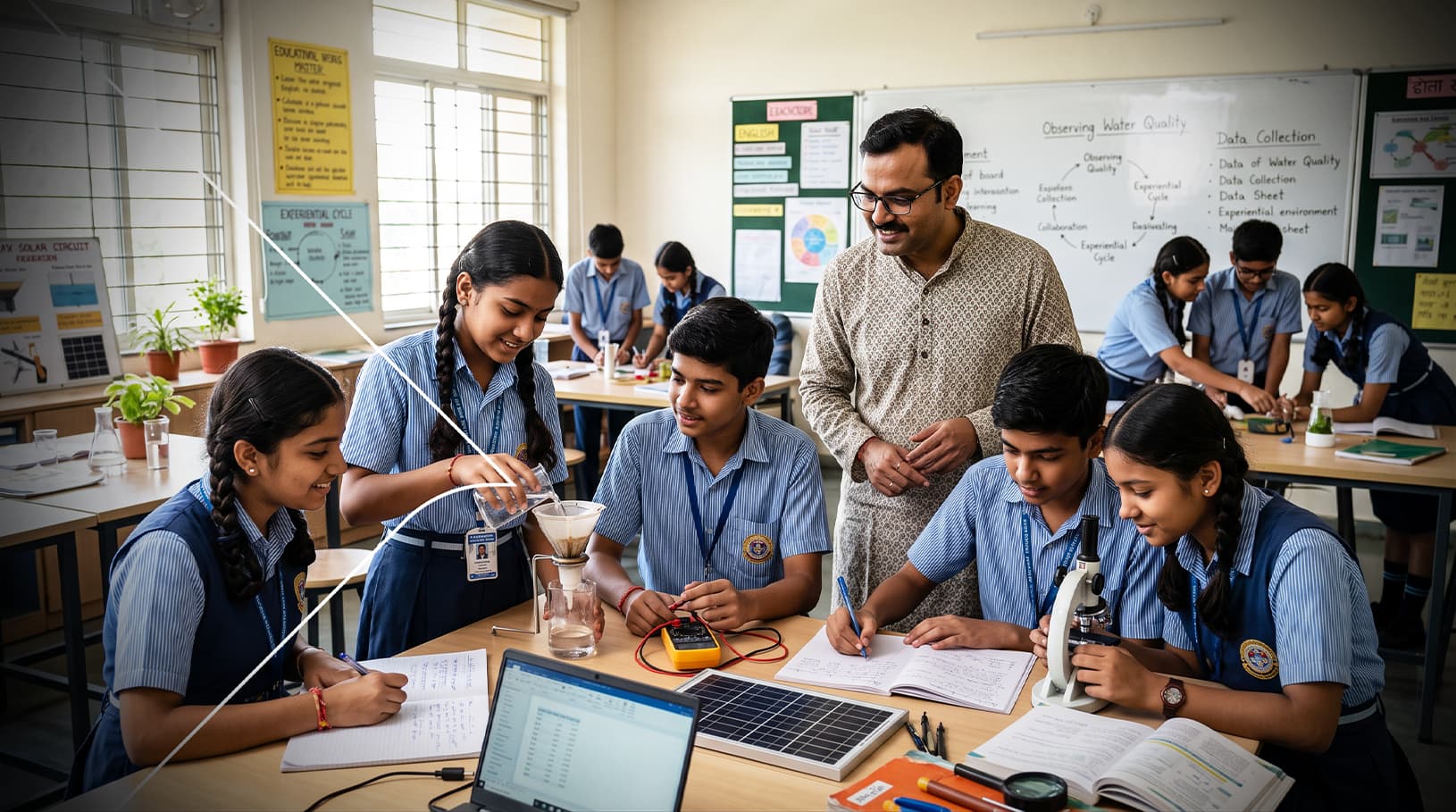
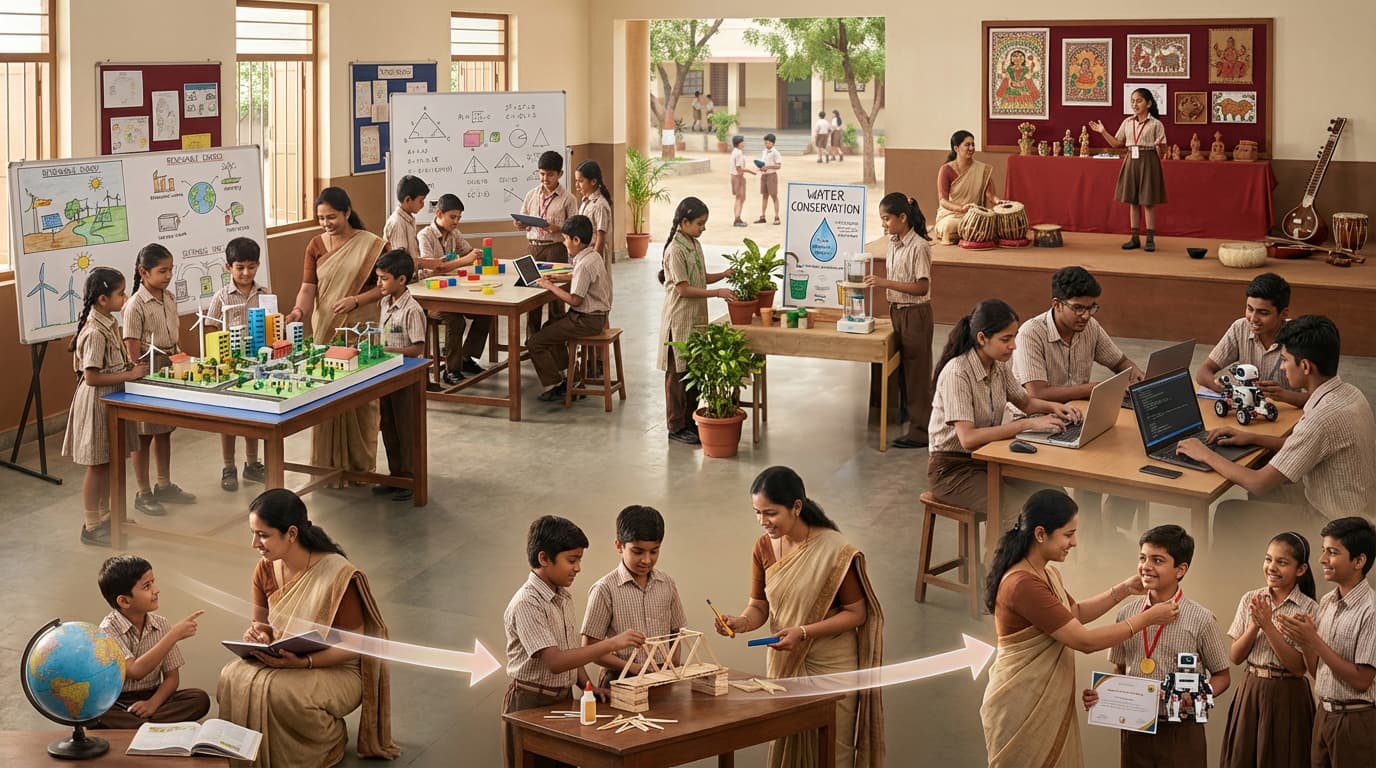
• A unit on water can integrate the water cycle (Science), river systems (Geography), ancient river valley civilisations (History), water consumption data (Mathematics), and conservation campaigns (Languages and Art).
• A project on designing a smart city can combine urban planning (Geography), sustainable infrastructure (Science), budgeting and data analysis (Mathematics), digital technologies (ICT), civic planning (Social Science), and architectural design (Art), enabling students to solve authentic community challenges.
• Exploring local heritage can bring together local history (History), architecture (Art), mapping heritage sites (Geography), documenting oral histories (Languages), and creating digital exhibitions (Technology), enabling students to connect classroom learning with their community.
Similarly, NEP 2020 recommends introducing computational thinking and coding from the Middle Stage onwards (Section 4.25), enabling students to apply logical reasoning and problem-solving across subject areas.
Enabling Schools to Make the Shift
Successfully implementing multidisciplinary learning requires thoughtful planning rather than large-scale structural changes.
Schools can begin by:
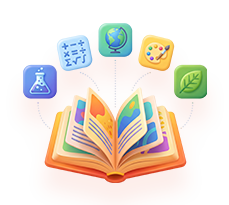
Designing thematic units that naturally connect multiple subjects.

Creating opportunities for collaborative planning among teachers.

Using projects, investigations, and real-life problem-solving activities.
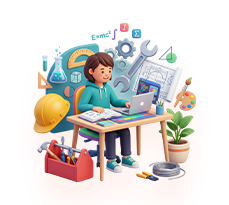
Integrating vocational education with academic learning from Grade 6 onwards.
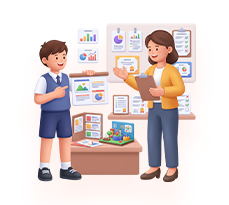
Expanding assessment beyond written examinations to include portfolios, presentations, projects, and performance-based tasks.
Enabling Educators to Make the Shift
Equally important is investing in teacher capacity. Since educators have traditionally been prepared to teach within a single discipline, professional development should support collaborative planning, integrated lesson design, and innovative assessment practices.
Assessment also needs to reflect these changes. When students are evaluated on how effectively they analyse, create, collaborate, and apply knowledge, assessment becomes a meaningful extension of learning rather than merely a measure of recall. Enabling this shift requires sustained professional development that equips educators through continuous professional development to design authentic, competency-based learning and assessment experiences.
Looking Ahead
Multidisciplinary learning is not simply another instructional strategy: it represents a fundamental shift in how schools view knowledge, learning, and student development.
NEP 2020 recognises that preparing learners for the future requires more than subject mastery. It requires helping them connect ideas, think across disciplines, solve authentic problems, and continue learning throughout their lives.
For school leaders, the opportunity extends beyond implementing a policy. It lies in cultivating a learning culture where curiosity, collaboration, creativity, and critical thinking become everyday experiences. By gradually building stronger connections across subjects and creating meaningful learning experiences, schools can move closer to the vision of holistic, competency-based education that NEP 2020 seeks to realise.
References
- Ministry of Education, Government of India. National Education Policy (NEP) 2020. Education.gov.in https://ncert.nic.in/pdf/nep//NEP_2020.pdf
- Bransford, J. D., Brown, A. L., & Cocking, R. R. (Eds.). (2000). How People Learn: Brain, Mind, Experience, and School. National Academies Press. https://cradall.org/sites/default/files/How%20People%20Learn-Brain_Mind_Experience_and%20School%20-%20Expanded%20Edition.pdf
- Thomas, J. W. (2000). A Review of Research on Project-Based Learning. https://www.semanticscholar.org/paper/A-REVIEW-OF-RESEARCH-ON-PROJECT-BASED-LEARNING-Thomas/556a3e1…
- OECD. (2018). The Future of Education and Skills: Education 2030.
https://www.oecd.org/en/about/projects/future-of-education-and-skills-2030.html