

As schools across India integrate technology at an accelerating pace, a critical question emerges for educators and school leaders: Is the technology available in classrooms genuinely improving how students learn, or is it simply modernising how content is delivered? The answer to this question determines whether technology investment translates into lasting educational value.
This blog explores the distinction between digital tools and digital learning solutions, examines what global research and national policy indicate, and offers practical guidance for schools seeking to make purposeful, evidence-informed decisions about technology integration.
Digital Learning Solutions for Schools: What Sets Them Apart from Digital Tools?
Digital tools encompass the hardware and software commonly deployed in school settings, such as interactive boards, student devices, digital textbooks, learning applications, and Learning Management Systems. These resources serve as instruments of instruction. On their own, however, they do not guarantee any improvement in learning quality.
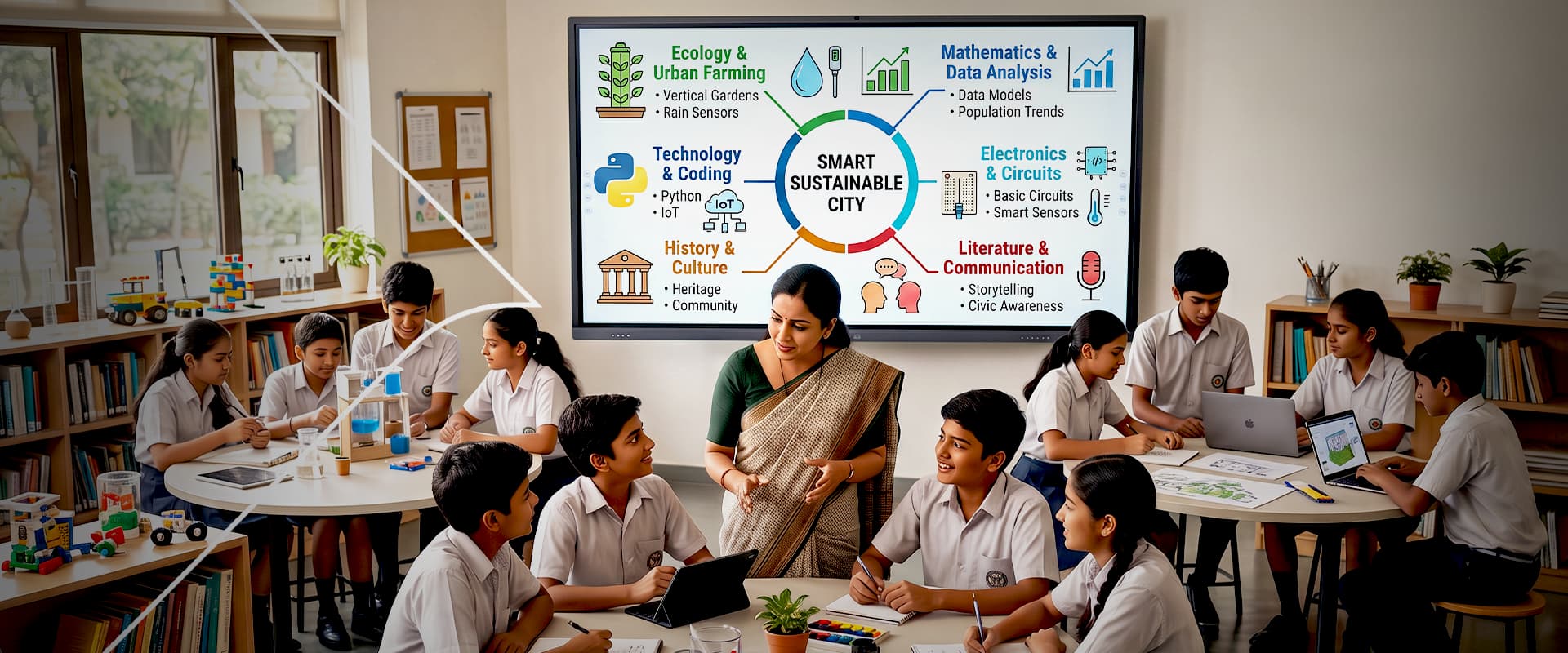
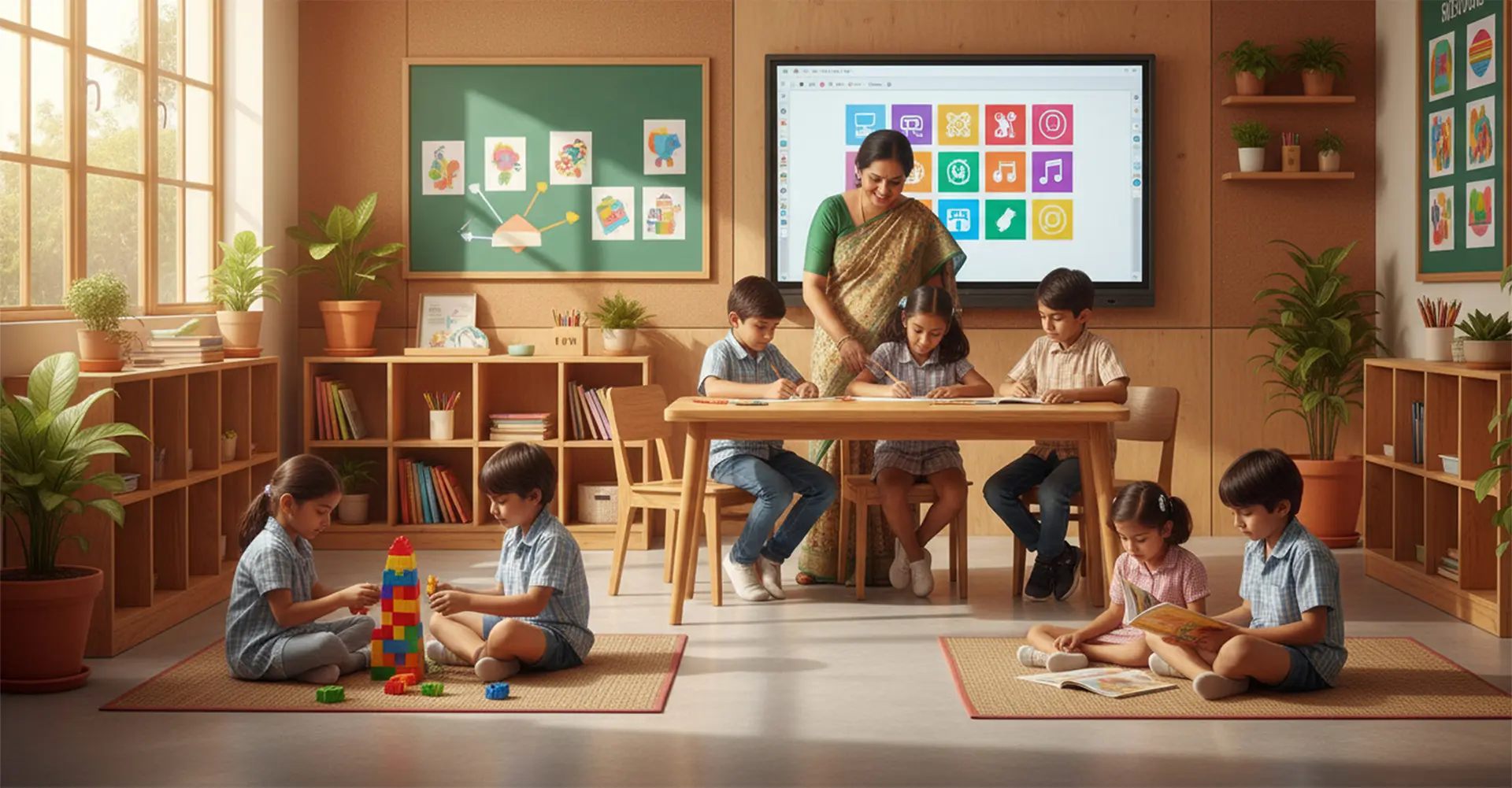
Digital learning solutions, by contrast, represent a pedagogical orientation. They describe the intentional use of technology to support active student engagement, higher-order thinking, collaborative inquiry, and personalised learning processes that are deliberately designed by educators with clear learning outcomes in mind.
To illustrate the distinction, a student viewing a pre-recorded lesson on a tablet is engaging with a digital tool. The same student using a tablet to investigate a scientific question, record observations, collaborate with peers on an analysis, and communicate findings to an audience that constitutes a digital learning experience. The device remains unchanged; the quality of cognitive engagement is fundamentally different.
Why This Distinction Matters for School Decision-Making?
School leaders routinely face decisions about technology procurement, new infrastructure devices, platforms, and interactive systems that are visible and tangible, making it an appealing indicator of institutional progress. However, research consistently demonstrates that access to technology alone does not produce measurable gains in student learning.
An OECD (Organisation for Economic Co-operation and Development) report, Students, Computers and Learning: Making the Connection (2015), examined technology investment across school systems and found no appreciable improvement in student performance in reading, mathematics, or science in countries that had invested heavily in ICT (Information and communications technology) for education. The report cautioned that adding new technologies to unchanged teaching practices risks diluting, rather than enhancing, the effectiveness of instruction, and that meaningful gains require technology to be placed in the service of pedagogy (OECD, 2015).
UNESCO’s 2023 Global Education Monitoring Report, Technology in Education: A Tool on Whose Terms?, raised a related concern, cautioning against the widespread assumption that deploying educational technology is inherently beneficial. The report argued that technology should be introduced into education on the basis of evidence, and that its use must always serve learners’ best interests rather than substitute human interaction and teacher-led instruction (UNESCO, 2023).
For schools, these findings carry a clear implication: the procurement decision is not the end of the process. It is the beginning of a far more consequential set of choices about implementation, pedagogy, and impact.
The Direction Set by India's National Education Policy (NEP) 2020
India’s National Education Policy (NEP) 2020 is clear on the role of technology in schooling. While affirming its potential to improve educational processes and outcomes, the policy insists that all technology-based interventions be evaluated for their demonstrable impact on student learning. It further proposes the establishment of a National Educational Technology Forum (NETF) to provide a platform for evidence-based decision-making on the induction, deployment, and use of technology across the education system (NEP 2020, Section 23.3).
The National Curriculum Framework for School Education (NCF-SE) 2023 builds on this by describing digital tools as enablers of good pedagogy, particularly for experiential learning, differentiated instruction, and formative assessment. The framework underscores that these outcomes depend on deliberate teacher design, not on the passive availability of devices.
Taken together, both policy documents reframe the central question for schools: not what technology is available, but how it is being used, by whom, towards what learning goals, and with what evidence of impact.
A Framework for Evaluating Technology Integration:
The SAMR Model
A useful reference point for teachers and school leaders is the Substitution, Augmentation, Modification, Redefinition (SAMR) Model, developed by Dr. Ruben Puentedura (2006). The model describes four levels at which technology can be integrated into teaching and learning:
Redefinition
Tech allows for the creation of new tasks, previously inconceivable
Integrated with workgroup and content management software
Modification
Tech allows for significant task redesign
Integrated with email, spreadsheets, graphing packages
Augmentation
Tech acts as direct tool substitute, with functional improvement
Basic functions (e.g., cut and paste, spellchecking) used
Substitution
Tech acts as direct tool substitute, with no functional change
Word processor used like a typewriter
Puentedura, R. R. (2006)
In many school settings, technology use remains concentrated at the Substitution level, changing the medium of learning without altering its depth. Meaningful digital learning begins to emerge at Modification and reaches its fullest expression at Redefinition. The SAMR Model offers teachers a structured, accessible vocabulary for reflecting on and progressively improving their own integration practices.
Indicators of Effective Digital Learning in the Classroom
Effective digital learning (EDL) is not defined by the sophistication or cost of the technology involved. It is characterised by the quality of teaching-learning and student engagement that the technology supports. Key indicators include:
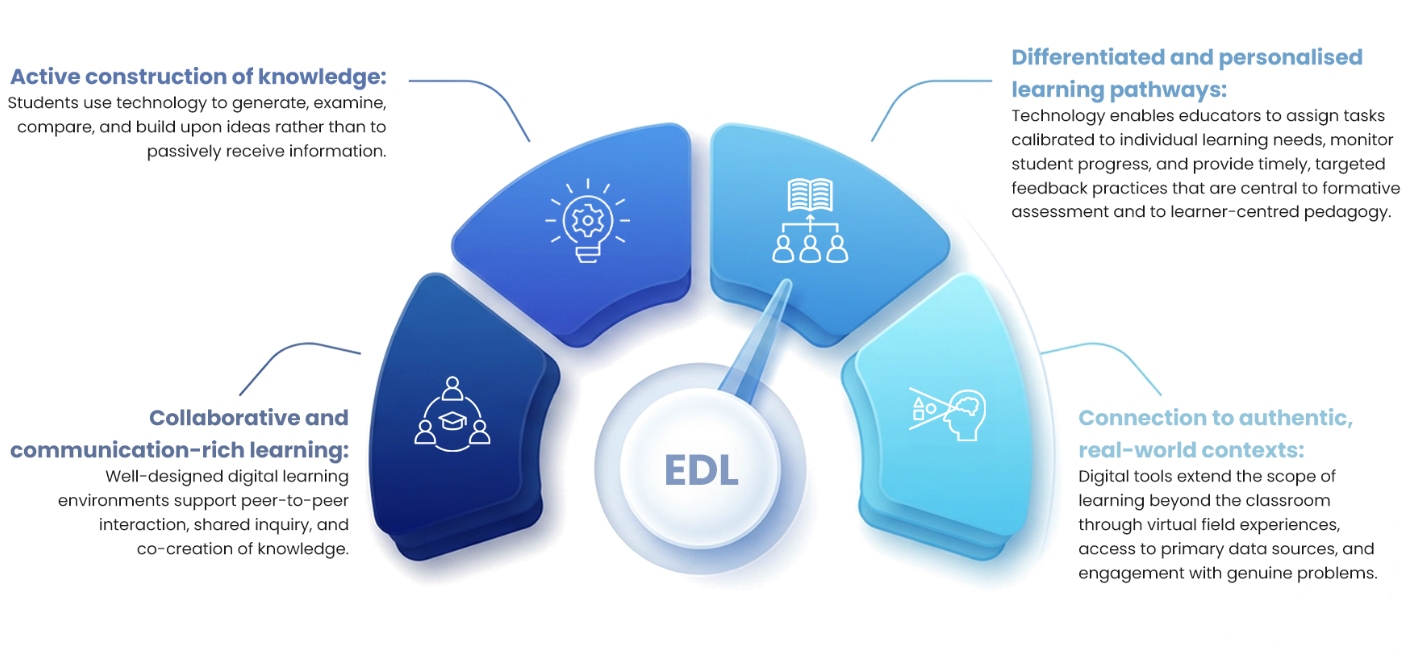
A consistent finding from research on educational technology is that technology amplifies the quality of existing teaching; it does not substitute for it. In classrooms where teachers function as thoughtful designers of learning experiences, digital tools become powerful catalysts for student growth. Where instructional approaches remain transmission-based and teacher-centred, the same tools may change very little.
John Hattie’s synthesis of over 800 educational meta-analyses found that technology, when used in isolation, has a modest effect on student achievement. His research separately identifies feedback and clearly communicated learning intentions as among the most powerful influences on student outcomes, suggesting that technology is most likely to be effective when embedded within these higher-impact pedagogical practices (Hattie, 2009).
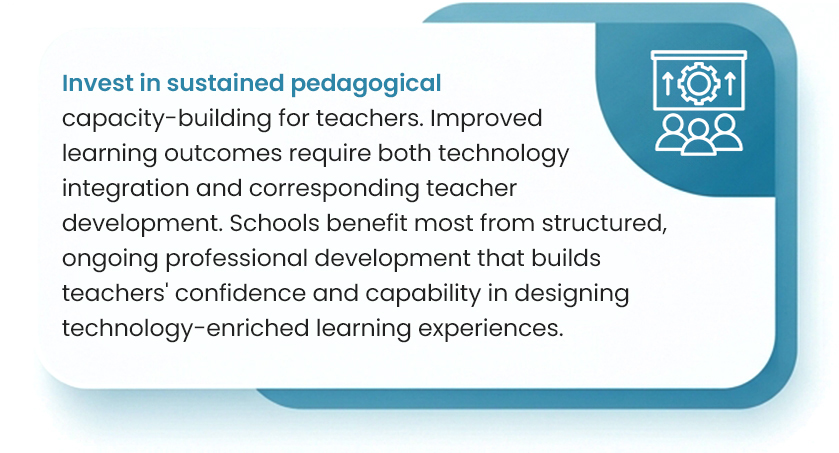
This evidence positions the teacher as the primary architect of student learning, one who selects, sequences, and designs conditions in which technology plays a considered, purposeful role. Professional learning for teachers must therefore focus not on technology features, but on the pedagogical decisions that determine whether technology enriches or simply accompanies the learning experience.
Practical Steps for Schools Moving from Tools to a Digital Learning Solution Approach
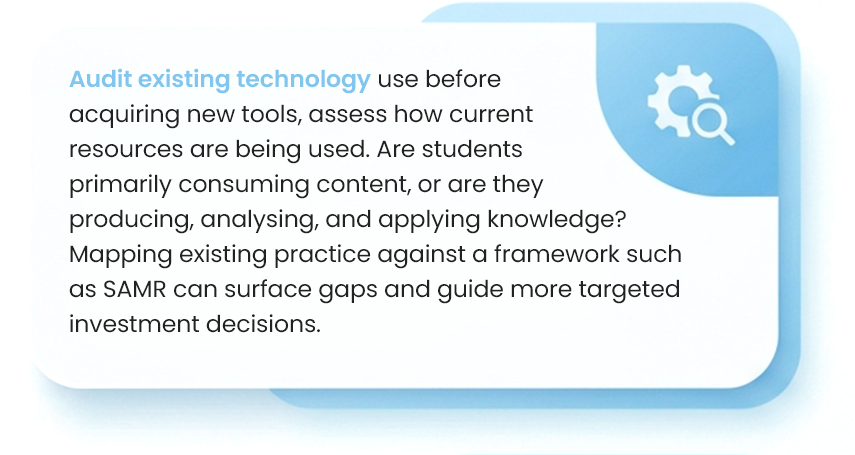
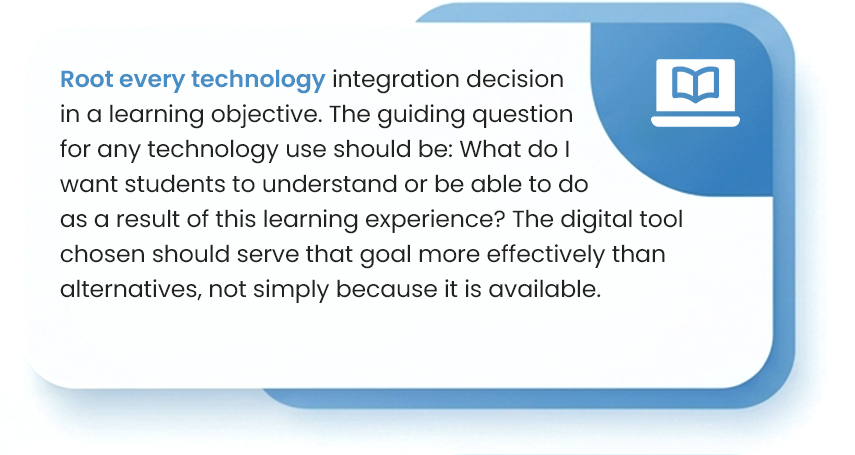
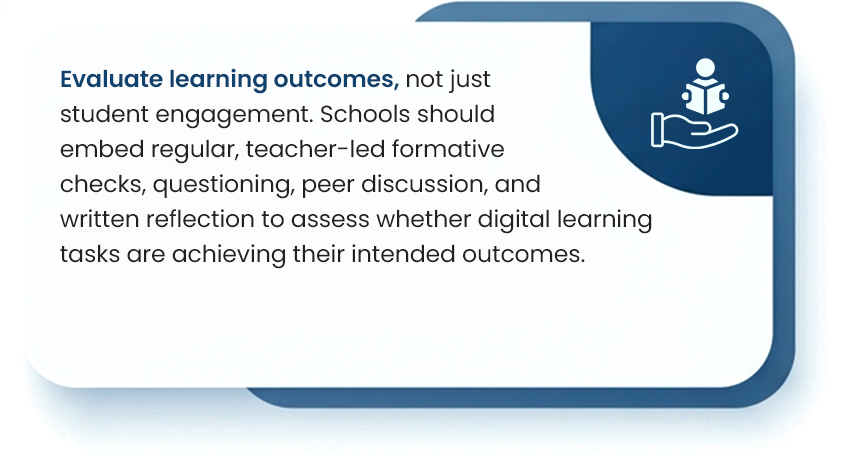
Transitioning from a technology-present school to a digitally-enabled learning environment requires deliberate action at both the classroom and institutional levels. The following steps offer a starting point:
Conclusion
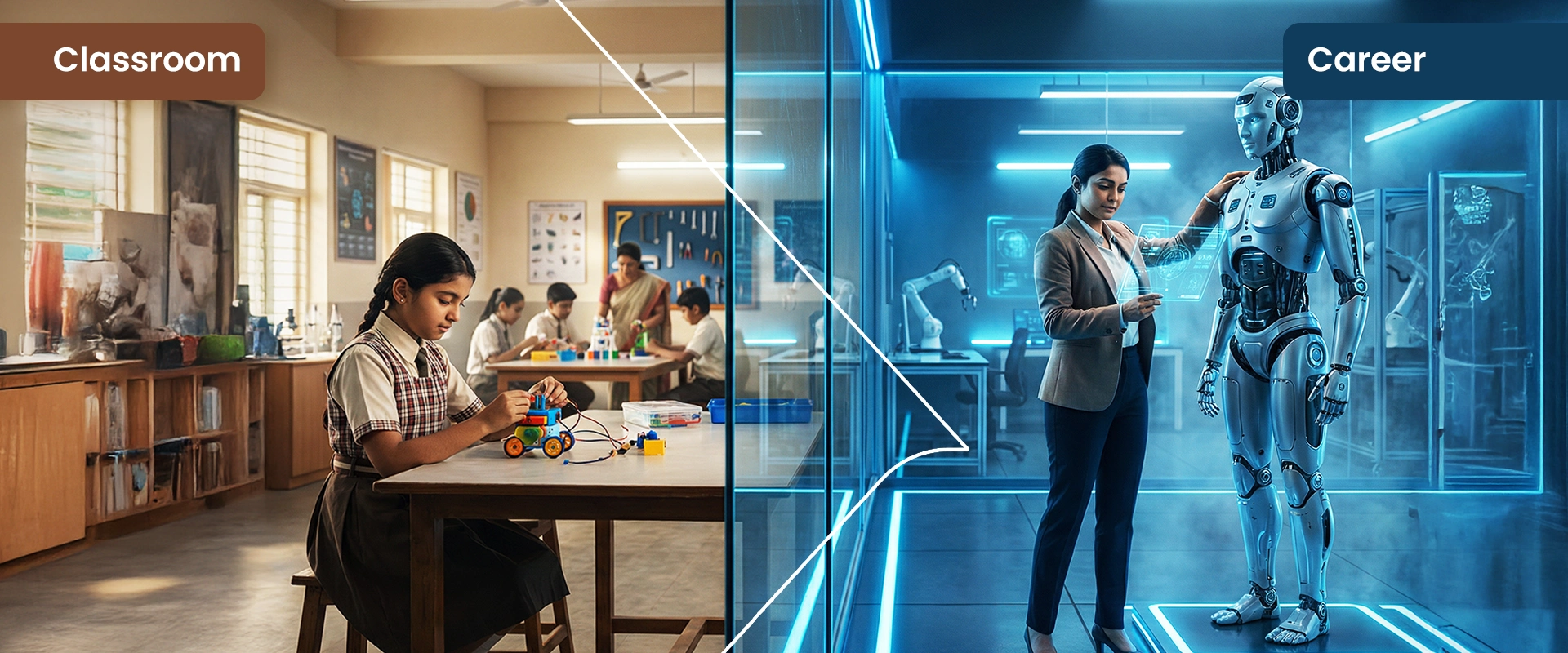
Technology holds genuine and significant potential for improving school education in India. Realising that potential, however, requires schools to move beyond the question of access to the far more substantive question of application: whether these tools are being used to support richer, more purposeful learning.
Digital learning emerges when technology is embedded within thoughtfully designed experiences that engage students in thinking, creating, collaborating, and applying knowledge in meaningful contexts.
Both NEP 2020 and NCF-SE 2023 are consistent in their underlying message: technology must be evaluated for its impact on learning, and pedagogy, not procurement (NEP 2020, Section 23.3 & NCF-SE 2023).
Schools that make this shift from procurement to pedagogy, from tools to learning solutions, are the ones best positioned to deliver on the promise of digital education.
References
- Hattie, J. (2009). Visible Learning: A Synthesis of Over 800 Meta-Analyses Relating to Achievement. Routledge. https://www.taylorfrancis.com/books/mono/10.4324/9780203887332/visible-learning-john-hattie
- Ministry of Education, Government of India. (2020). National Education Policy 2020. https://www.education.gov.in/sites/upload_files/mhrd/files/NEP_Final_English_0.pdf
- Ministry of Education, Government of India. (2023). National Curriculum Framework for School Education (NCF-SE) 2023. https://ncf.ncert.gov.in/
- OECD. (2015). Students, Computers and Learning: Making the Connection. PISA, OECD Publishing. https://doi.org/10.1787/9789264239555-en
- Puentedura, R. R. (2006). Transformation, Technology, and Education. http://hippasus.com/resources/tte/
- UNESCO. (2023). Technology in Education: A Tool on Whose Terms? Global Education Monitoring Report 2023. UNESCO Publishing. https://www.unesco.org/gem-report/en/technology